If your child only eats beige foods and gives broccoli the stink eye, you’re not alone — and you’re not failing.
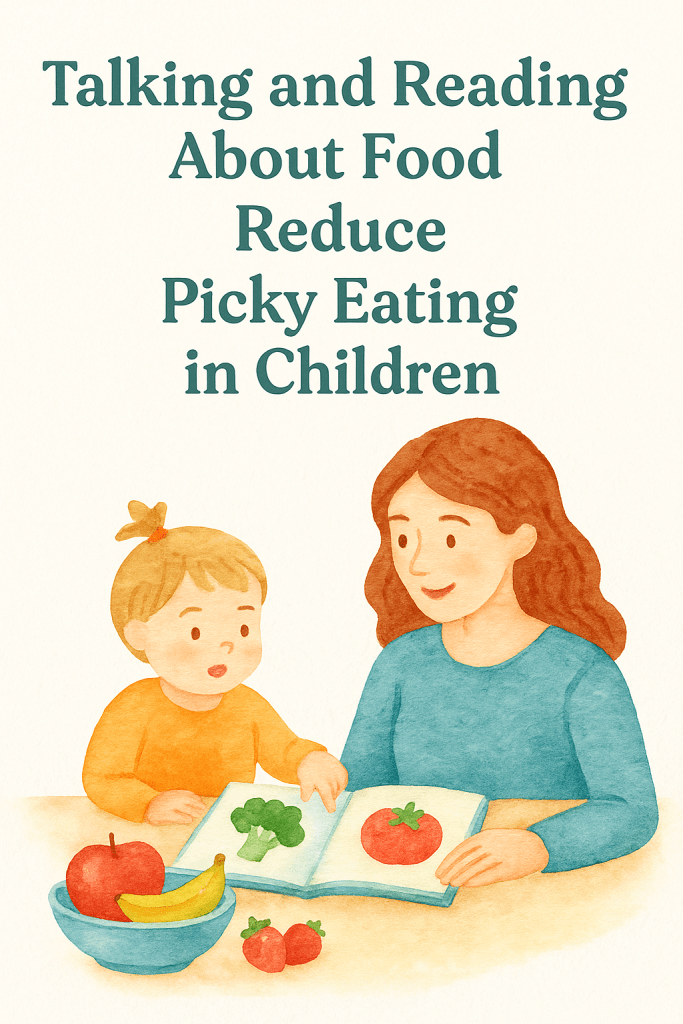
Picky eating is a normal part of early childhood. However, if mealtimes have become a battleground and you’re longing for a dinner without negotiations, here is some hopeful news: the path to less picky eating might just begin with a book and a good conversation.
Yes — reading and talking about food (away from the dinner table!) can help even the pickiest little eaters become more adventurous over time.
Why Words Matter More Than You Think
For many children, picky eating stems not just from dislike but from fear of the unfamiliar. This food neophobia — the natural tendency to reject new foods — is especially strong between ages 2 and 6.
But here’s the hopeful part: repeated, pressure-free exposure can reshape how kids feel about food. And it doesn’t have to start on their plate.
Books and conversations are gentle gateways to curiosity. When a child hears you describe the crunch of a carrot or sees a storybook character bravely trying spinach, they begin to imagine that experience for themselves. Familiarity breeds comfort — and eventually, willingness.
What the Research Says
1. “Read for Nutrition” Improved Veggie Liking and Eating
A study published in Public Health Nutrition found that preschoolers exposed to storybooks featuring vegetables significantly increased their liking and consumption of those same foods. This intervention paired reading with sensory experiences — like touching, smelling, and helping prepare the vegetable — and it worked.
📖 Read the study
2. The “See & Eat” Digital Book Project
In the See & Eat project, toddlers viewed digital books about vegetables before being offered them to eat. Children who saw the books showed increased willingness to taste and enjoy the vegetables, even beyond the ones featured in the story.
📖 Explore the project
3. Storybooks Plus Sensory Play = Lasting Results
Another study, published via NIH, looked at combining storybook reading with sensory play (e.g., letting kids touch or smell veggies while reading). This combo proved more effective than either approach alone at increasing children’s willingness to try unfamiliar vegetables.
📖 See the study on PubMed Central
How to Get Started
1. Choose Food-Friendly Books
Look for colorful, playful stories that feature characters exploring and enjoying new foods or the descriptions of foods themselves. Try:
- Rah, Rah, Radishes! or Go Go Grapes by April Pulley Sayre
- The Very Hungry Caterpillar by Eric Carle
- I Will Never Not Ever Eat a Tomato by Lauren Child
These stories normalize food exploration and make veggies feel familiar and fun.
2. Talk About Food Away From Mealtimes
Use descriptive, sensory-rich language:
- “This yogurt is super creamy, like a cloud!”
- “That pepper is crunchy and bright — what color do you think it tastes like?”
Talking about food in a pressure-free setting helps build positive associations. This can be done in many settings but one of the easiest and most natural often is the grocery store.
3. Let Your Child Lead the Conversation
Ask open-ended questions:
- “What food would you put in your own soup?”
- “If you could invent a new fruit, what would it look and taste like?”
- “If you could make a rainbow snack, what would go in it?”
- “Can you name a food that sounds fun when you chew it?”
Giving your child a voice builds confidence and curiosity — two powerful tools for overcoming picky habits.
A Gentle Reminder
You don’t need to force, bribe, or beg. Just start reading, chatting, and staying curious together. A child who feels safe and involved is far more likely to try something new — even green things with leaves.
Your next veggie victory might begin with a story.
Save this for later or share with a parent who needs some mealtime hope. And let us know — do you have a favorite food-themed book your child loves? Drop it in the comments below!

 Life Made Wholesome